


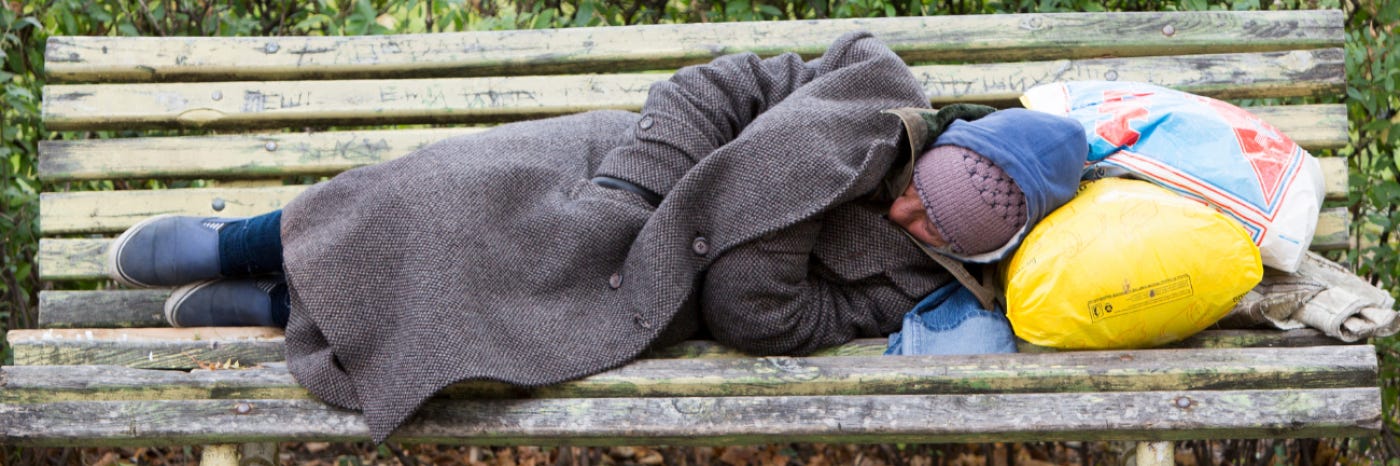
Assisting an entrenched homeless person to move back into society requires wraparound services, including a place to live, personal support, protected work, job training, health interventions and supported access to rehabilitation services.
This was the view of Dr Donald Skinner of the Division of Health Systems and Public Health in an opinion piece for the Weekend Argus to mark World Homeless Day on 10 October.
World Homeless Day on 10 October is a timely reminder that homelessness remains a serious concern in South Africa with the number of homeless people increasing over time. The 2022 Census recorded 55,719 people experiencing homelessness across the country, up from the 13 135 counted in 1996. It is widely acknowledged that the 2022 Census is a significant undercount in general.
Entrenched homelessness refers to people being without a home for more than five years. This is a hard-to-reach group with generally increased problems even over other people who are homeless. We don’t have enough information to understand their context and problems.
In 2020, Jonathan Hopkins, Jesse Laitinen and I conducted a survey of homeless people in Cape Town, working with organisations that provide services to this community. This cooperation enabled us to reach more homeless people and increased the likely trust of respondents in the survey. Within the larger sample of 350 respondents, there was a sub-group of 157 respondents who fitted the definition of entrenched homeless. They have found their own lifestyle setting them apart even from other homeless people.
The mean age of the group was 42.1 years, while 69% were men and 31% women. They didn’t often use emergency and other shelters, which are the major housing services provided by the City. Over 75% reported sleeping outside in temporary spaces, either in urban areas or in parks / vacant lots, increasing their vulnerability. The remainder moved between different temporary accommodations.
Respondents generated income independently. They reported an average income of R90 a day, but this varied considerably among them and will likely vary over time. They earned an income mainly through what is termed “skarreling”, made up of guarding cars, collecting recycling, handouts from households or at traffic lights, or payment for small jobs.
A small number live off disability grants. To maintain these earnings, most have moved into commercial centres or wealthier neighbourhoods where the opportunities of earning money are higher.
Members of the public often stigmatise and demand that they be removed from their areas, complaining of disruptive behaviour of generating a mess. Living in these areas does increase the likelihood of conflict with police, and nearly 70% of the group reported being arrested and 16% reported being arrested more than eight times.
Many of the “arrests” do not include being formally charged. They are picked up by police and put in a cell overnight, then released the next day. In this process, police generally confiscate or destroy their limited possessions. More than 50% reported spending time in prison, making it difficult to find work later.
Homeless people are more vulnerable to health problems, including infectious diseases and trauma. Almost half of the respondents in our survey reported visiting a hospital, and 55% a clinic in the three months prior to the survey. While not explored extensively in our study, mental health problems are also common, particularly those related to the impacts of trauma.
The complex nature of health problems among homeless people places a financial strain on state health services. This is made worse by them struggling to adhere to treatment. They consistently relapse in more severe symptoms and develop resistance to conventional medicine for diseases such as HIV and TB. They also use substances such as alcohol, methamphetamines, mandrax and marijuana regularly to survive their harsh living conditions and the impacts of trauma.
This group did not move onto the streets by choice and do not choose to stay there. The reasons for being on the street vary from loss of employment, being forced out of their homes, conflict with other family members, physical or sexual violence, particularly for women, to ongoing substance use.
While high levels of poverty and unemployment persist, it is hard to rehabilitate this group and to reduce the increasing number of people moving into life on the street. They have made the streets ‘home’ and are hardest to move out of homelessness due to complex intersecting needs. Their survival mechanisms and daily habits become a lifestyle that is hard to break.
Temporary solutions such as shelters provide limited support and have little impact on this community. Assisting an entrenched homeless person to move back into society requires wraparound services, including a place to live, personal support, protected work, job training, health interventions and supported access to rehabilitation services as Jon Hopkins, Joanne de Goede and Sam Vos pointed out in their chapter in Facing homelessness: Finding inclusionary, collaborative solutions (2021). These approaches have been shown internationally to provide solutions.
Some developmental organisations in Cape Town, such as U-turn and Streetscapes who facilitated this survey, have been working successfully with homeless people to move them back into employment and reconnecting them with families and getting their own homes. However, their reach is limited due to insufficient resources and the need to further develop and scale effective approaches for our local context.
*Dr Donald Skinner is affiliated with the Division of Health Systems and Public Health at Stellenbosch University. This article is based on the paper ‘The Entrenched Homeless Population and the Particular Challenges that they and their Service Providers Face’, co-authored with Jonathan Hopkins and Jesse Laitinen and published recently in the International Journal on Homelessness (2026).
©Higher Education Media Services.