


South Africa has made notable progress in expanding access to education over the past two decades, but ensuring that learners participate meaningfully, progress through the system and ultimately succeed remains the country’s greatest challenge.
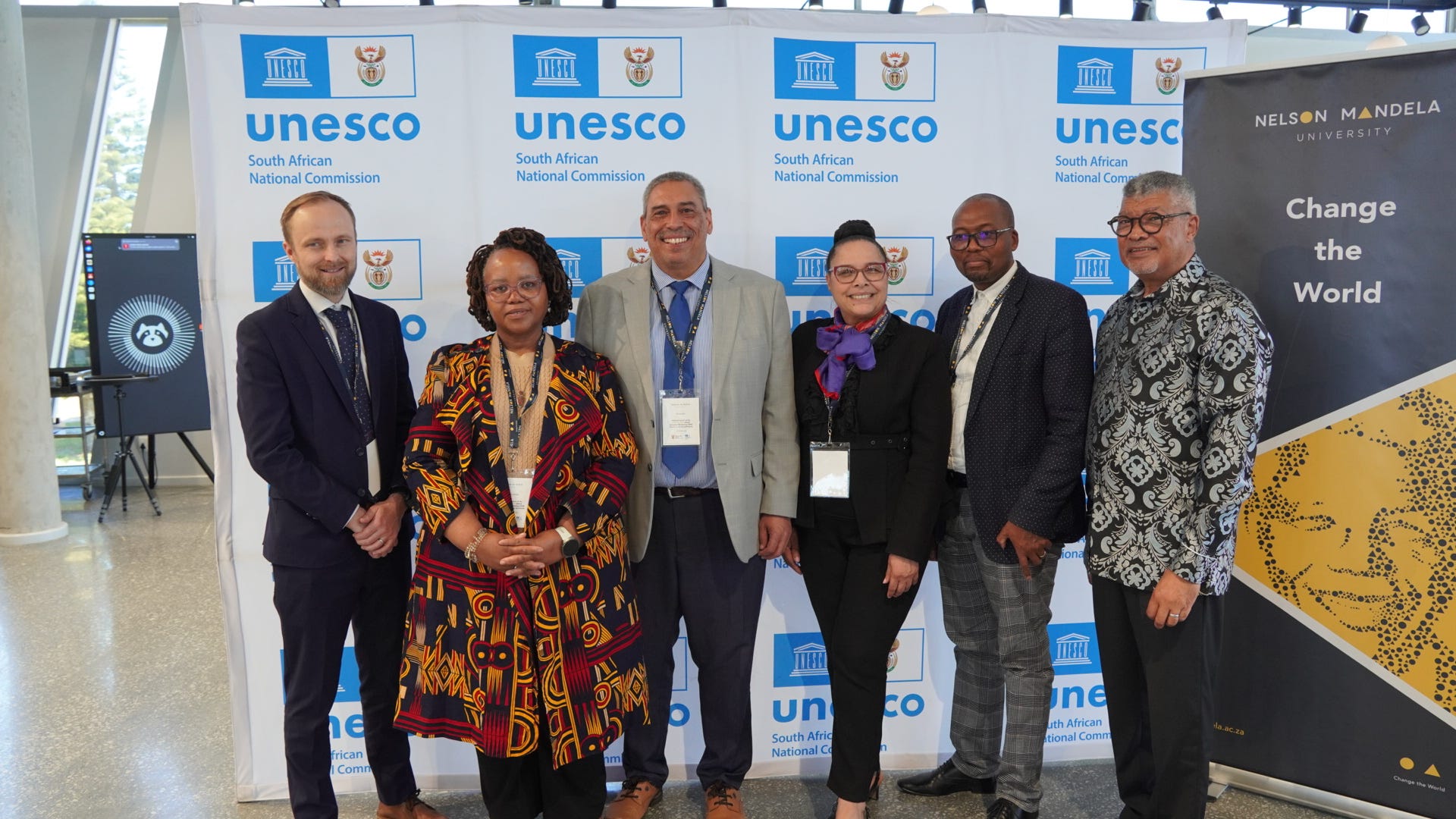
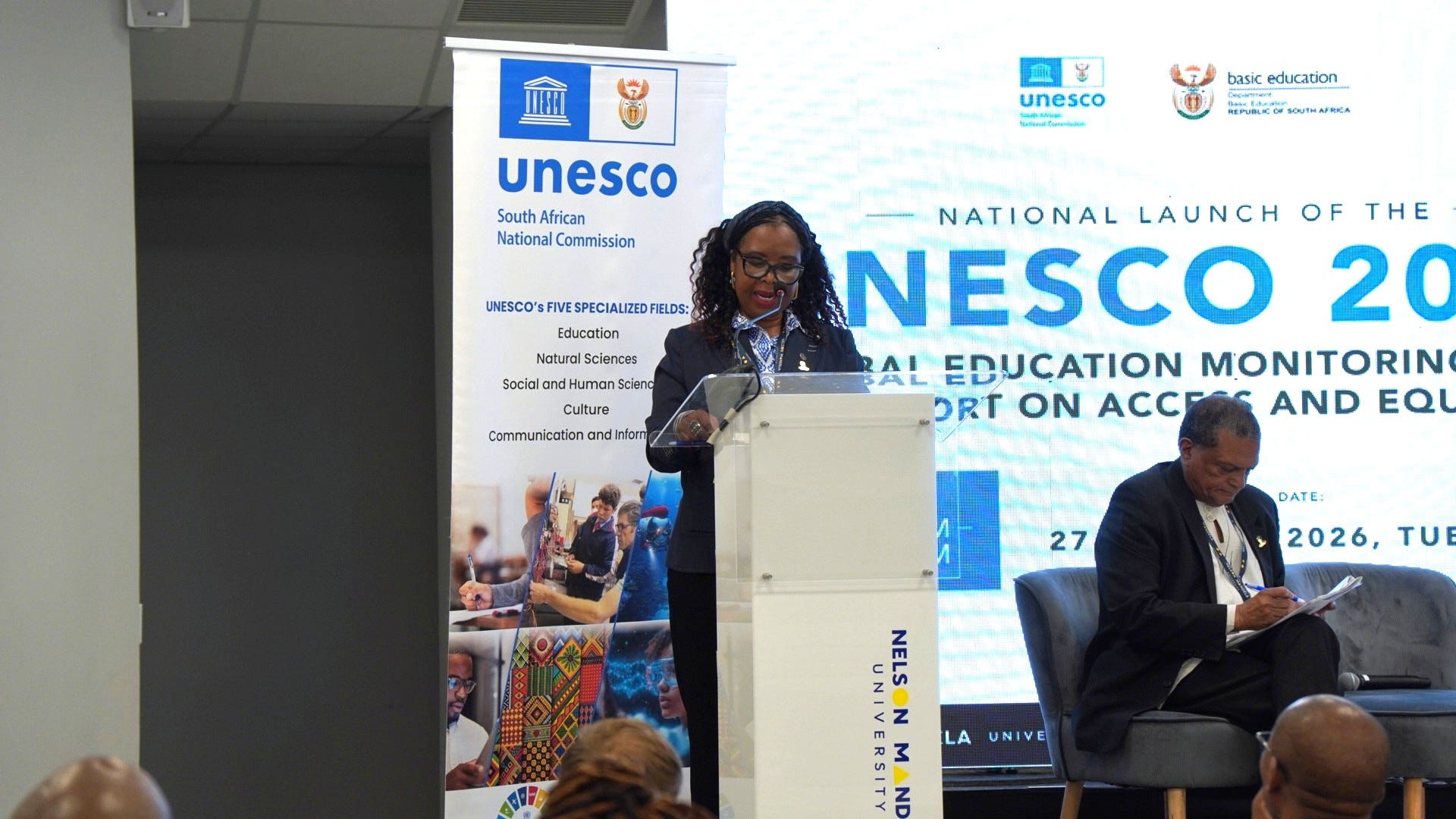
This was the central message emerging from the national launch and policy dialogue on UNESCO’s 2026 Global Education Monitoring (GEM) Report, hosted by Nelson Mandela University in partnership with the South African National Commission for UNESCO (NATCOM) and the GEM Report team in Gqeberha.
The dialogue brought together government officials, education researchers, school leaders, academics, students and development partners to assess progress towards Sustainable Development Goal 4 (SDG 4), which seeks to ensure inclusive, equitable and quality education for all by 2030.
Opening the event, Nelson Mandela University Vice-Chancellor Professor Sibongile Muthwa said South Africa’s education journey since the advent of democracy had expanded access significantly, but longstanding inequalities continue to shape educational outcomes.
She noted that barriers linked to poverty, geography, disability, language, gender and socioeconomic circumstances continue to affect many learners. While increasing enrolment remains important, she said equity cannot be measured solely by the number of children entering classrooms.
“The challenge before us is not only to expand access but to ensure that access translates into meaningful participation, successful completion and opportunities for lifelong learning,” Muthwa said.
She stressed that education should be viewed not only as an educational priority but also as a social, economic and moral imperative capable of reducing inequality, strengthening social cohesion and supporting sustainable development.
Muthwa also emphasised the importance of collaboration among government, universities, schools, researchers, civil society and development partners. Genuine educational transformation, she argued, requires collective action and a commitment to supporting learners throughout their educational journeys.
“Behind every indicator is a human story,” she said, referring to children seeking access to classrooms, learners overcoming obstacles to participate, teachers striving to inspire their pupils and families investing their hopes in education.
Significant gains in access
Presenting the report’s findings, GEM Report director Manos Antoninis highlighted substantial improvements in educational access in South Africa between 2000 and 2024.
According to the report, the proportion of primary school-age children who were out of school declined from 14% to 6%. Among lower-secondary school-age adolescents, the figure dropped from 16% to 7%, while the share of upper-secondary-age youth outside the education system decreased from 34% to 17%.
Education completion rates also improved considerably. Primary school completion rates reached 97%, while completion rates stood at 90% in lower secondary education and 54% in upper secondary education.
Despite this progress, Antoninis warned that access gains alone are insufficient if inequalities continue to affect educational experiences and outcomes.
The report points out that South Africa remains one of the world’s biggest investors in education, spending approximately 6% of gross domestic product and 19.1% of total government expenditure on the sector. However, investment in pre-primary education remains relatively low at 0.1% of GDP, highlighting the need to strengthen funding for early childhood education.
Antoninis cautioned against viewing any single policy intervention as a solution to educational challenges.
“There are no silver bullets,” he said, arguing that countries must combine a range of reforms tailored to their own circumstances and challenges.
While global lessons can be useful, he stressed the importance of adapting successful approaches to local realities. Education reforms that work elsewhere cannot simply be imported without considering South Africa’s unique context.
He also highlighted the need for resources to be directed towards disadvantaged schools, regions and learners. South Africa already employs several equity-focused mechanisms, including the school quintile funding model, fee exemptions and the National School Nutrition Programme, all aimed at reducing barriers to learning.
Beyond admission to genuine inclusion
The conversation also focused on challenges within higher education, where increasing student enrolment does not necessarily translate into student success.
Nelson Mandela University Associate Professor Cina Mosito argued that educational inclusion must be assessed not only by who enters university, but also by who remains enrolled, progresses successfully, graduates and benefits from the educational experience.
Drawing on her research in inclusive education and teacher development, Mosito said students from disadvantaged backgrounds frequently encounter obstacles that extend far beyond admission.
Financial hardship, inadequate learning resources, language barriers, unfamiliar academic environments and difficulties navigating institutional systems can undermine student success.
For first-generation university students and those from rural communities, the transition into higher education can be particularly challenging. Universities therefore need to provide targeted academic support and opportunities that help students develop the knowledge and skills needed to thrive.
Mosito called on higher education institutions to monitor retention and progression as carefully as they track enrolment figures. She urged universities to allocate resources according to students’ needs, strengthen inclusive teaching methods and deepen engagement with schools, families and communities.
She also argued that responsibility for inclusion should not sit only with specialised support units. Every lecturer, faculty and academic department should see student success as part of their mandate.
“Universities were not made for universities. They were made for communities,” she said.
Participants agreed that stronger links between schools and universities are needed to support learners transitioning into higher education, particularly those whose schooling may not have adequately prepared them for university-level demands.
Early intervention and early childhood development
UNICEF South Africa Chief of Education Hana Yoshimoto stressed that efforts to achieve educational equity must begin long before children enter formal schooling.
She highlighted the importance of investing in early childhood development, directing resources towards vulnerable learners and improving systems for identifying children at risk of exclusion.
Yoshimoto noted persistent disparities in access to quality early learning opportunities and called for better data to understand differences in participation and educational quality across provinces and communities.
She also highlighted language as a critical factor in early learning. Educational materials aligned with South Africa’s National Curriculum Framework have now been translated into all 11 official languages, creating greater opportunities to provide learning resources that are accessible and culturally relevant.
Her presentation reinforced the view that educational success depends on a continuum of support beginning in early childhood and continuing throughout a learner’s educational journey.
Shared responsibility
The dialogue repeatedly returned to the importance of partnerships and collective responsibility.
Participants discussed ways to expose school learners to university environments from an early age, helping them become familiar with higher education opportunities and expectations. There were also calls for more reciprocal engagement between educational institutions and communities, ensuring that interventions are informed by the experiences and realities of those they are intended to serve.
The discussion also highlighted concerns about boys’ educational outcomes. Participants pointed to lower levels of engagement among boys, as well as links between poor foundational learning, grade repetition and school dropout. Further research was identified as necessary to better understand the social and educational factors contributing to these trends.
In closing, NATCOM chairperson Professor Ihron Rensburg warned against adopting international education models without adapting them to local conditions. He called for sustained, equity-focused policies supported by adequate funding, long-term planning and a balanced combination of interventions.
He emphasised that competent, professional and engaged teachers remain essential to achieving educational goals and building a more equitable system.
As South Africa approaches the 2030 deadline for achieving SDG 4, the dialogue underscored a clear message: expanding access to education is a vital achievement, but the real measure of success lies in whether learners are supported to participate, progress and ultimately realise their full potential.
“Let us build education systems that do not merely reproduce inequalities, but actively create opportunities for every child everywhere,” Rensburg said.
©Higher Education Media Services.