


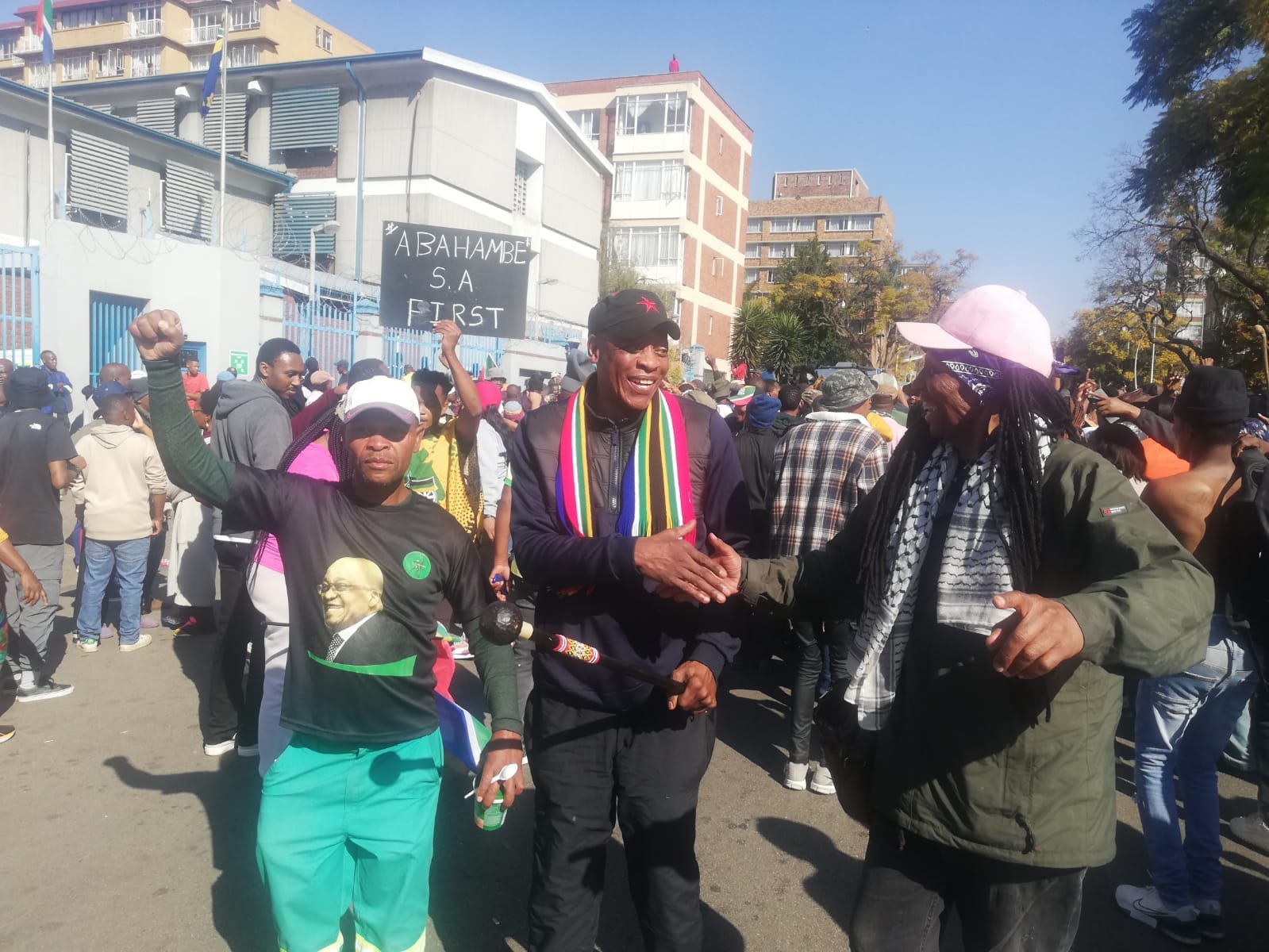
Police and private security companies remained on high alert as masses of people staged protests throughout South Africa against illegal immigration, porous borders and corruption in general.
However, reports show that the marches were peaceful except in one or two places in Johannesburg, where residents reportedly burned tyres and barricaded main roads.
But the main march led by leaders of March and March in Soweto, was attended by thousands of residents who were joined by hostel dwellers, remained peaceful and there were no incidents reported there.
Services in the City of Joburg were suspended on Tuesday 30 June as the day was set as the deadline for the government to deal with illegal immigration. There were different interpretations as to what is expected, with many illegal migrants fleeing their places of dwelling to seek refuge at their embassies. While scores of buses continued ferrying illegal immigrants from places as far as Malawi, Zambia and Zimbabwe.
Universities and schools across South Africa remained largely operational on Tuesday despite concerns that nationwide protests could disrupt learning and teaching activities. Authorities have intensified security measures across the country, while urging the public to continue with normal daily activities and avoid panic.
The planned demonstrations prompted heightened vigilance at educational institutions, particularly in major urban centres where increased police deployments, traffic disruptions and public gatherings could affect access to campuses and schools. However, there were no widespread reports of university shutdowns or school closures linked directly to the protests.
The situation comes against the backdrop of a challenging year for the higher education sector. Earlier in 2026, students at institutions including the University of the Witwatersrand (Wits), the University of Cape Town (UCT) and Stellenbosch University staged protests over NSFAS funding delays, fee blocks, historical debt and accommodation shortages. Those demonstrations disrupted registration processes and academic activities at several campuses.
Although Tuesday’s protests are focused on broader national issues rather than higher education concerns, university management teams have been monitoring developments closely to ensure the safety of students, staff and visitors. Potential risks include traffic congestion, transport delays and protest activity in areas surrounding campuses.
Schools have also remained open, with most learners attending classes as normal. Education authorities and school governing bodies have kept a close watch on developments, particularly in communities where demonstrations could affect transport routes used by learners and educators.
Government urges normality
Government has sought to reassure parents, students and educational institutions that the day should proceed as normal.
Acting Police Minister Firoz Cachalia said authorities had been preparing for the demonstrations for several weeks and cautioned South Africans against relying on misinformation circulating on social media.
“Tuesday should be treated as a normal business day,” Cachalia said, stressing that government and security agencies were fully prepared for the planned protests.
He added that extensive resources had been mobilised to support public-order policing and safeguard critical infrastructure, public services and communities during the demonstrations.
Police on high alert
Thousands of SAPS members, metro police officers, traffic officials and private security personnel have been deployed nationwide, particularly in Gauteng and other identified hotspots.
Acting National Police Commissioner Puleng Dimpane said law-enforcement agencies had undertaken extensive preparations at all levels to ensure public safety.
“Extensive planning has been undertaken at national, provincial and local levels,” Dimpane said as authorities moved to strengthen readiness ahead of the demonstrations.
Police have reiterated their support for the constitutional right to peaceful protest while warning that any unlawful conduct, violence or disruption to public services would be addressed swiftly.
Learning continues, but concerns remain
For universities and schools, the main concern is not necessarily direct protest action on campuses, but the knock-on effects that demonstrations may have on transport, attendance and normal operations. Some institutions may experience delays in the arrival of students, learners and staff if routes are affected by marches or increased security operations.
Despite these concerns, both the basic and higher education sectors are continuing with classes and examinations where scheduled, as authorities work to ensure that learning is not disrupted. The situation is being closely monitored throughout the day, with educational institutions remaining in contact with local officials and law-enforcement agencies to respond to any developments.
©Higher Education Media Services.