


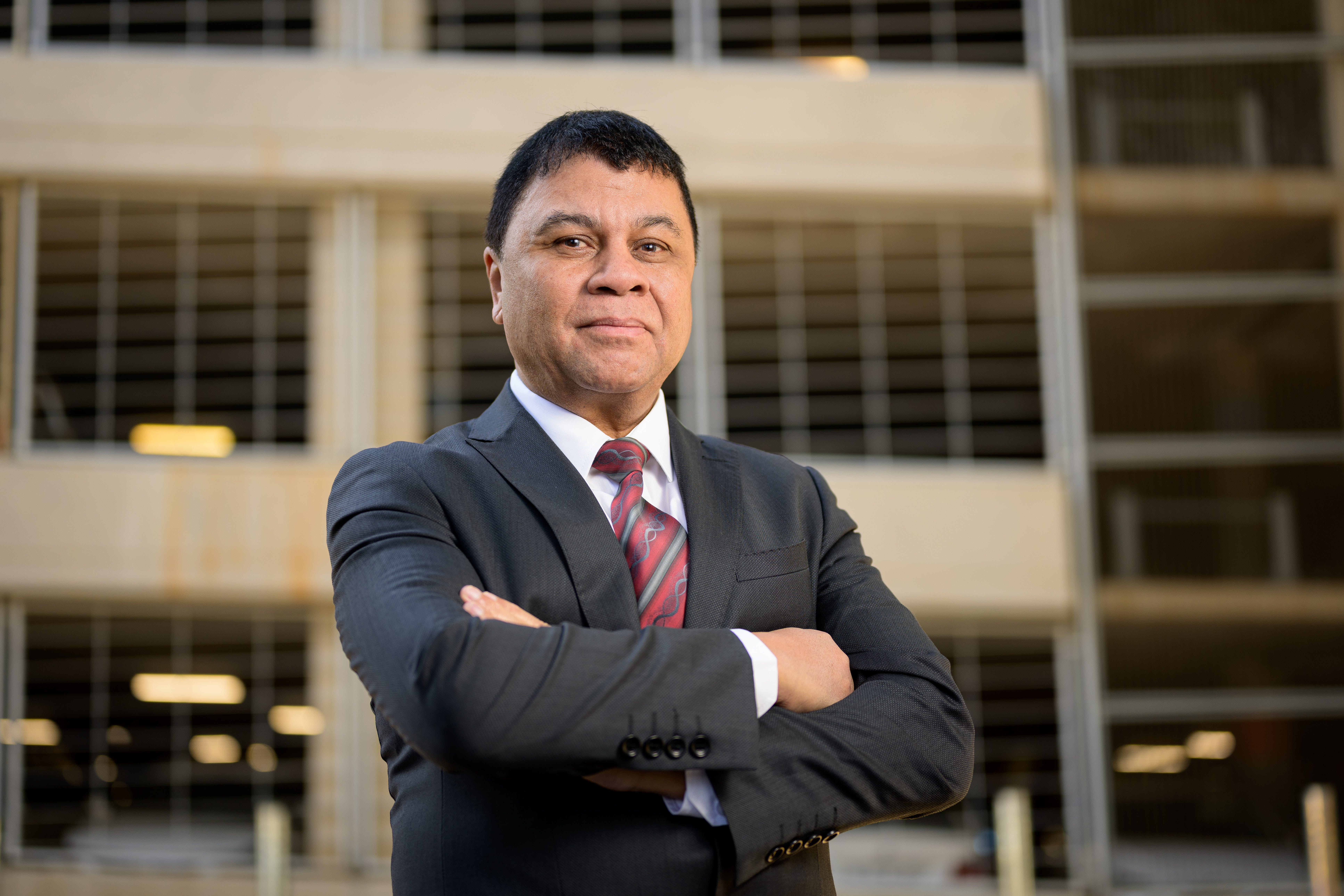
Institutional governance can no longer be treated as an isolated, campus-by-campus concern, according to Universities South Africa (USAf) Chairperson Professor Francis Petersen. USAf wants to sharpen the distinction between governance and management, strengthen induction and promote ongoing learning for councils and executive leaders.
The term ‘institutional capture’ has increasingly been used in the sector to describe efforts, both inside and outside an institution, to bend governance processes, decision-making and resource allocation away from the public interest and towards factional or private gain.
While South Africa’s public universities are autonomous, Petersen argues that recurring patterns of interference and role confusion mean the response cannot be left to single institutions acting alone.
USAf, which represents South Africa’s 26 public universities, says its focus is not only on responding to crises, but on improving baseline governance: clearer boundaries between councils and executives, better induction and support for council members, and shared expectations about ethical conduct, accountability and due process.
USAf hosted a governance online seminar on 23 March 2026 titled ‘Institutional Governance: Confronting the risks of institutional capture’, to examine threats to higher education governance.
Leaders raised concerns about actors seeking influence beyond statutory provisions, including attacks on executive leadership, political interference and pressure over resources and coordinated misinformation that distorts public perceptions of universities and some vice-chancellors (VCs).
Hosted by USAf’s Leadership and Management Strategy Group, the closed webinar followed a December 2025 VC retreat moderated by Professor Dr Letticia Mmaseloadi Moja, former chair of the council of the University of KwaZulu-Natal.
Petersen reflects on the discussion as several universities, including the University of Fort Hare in the Eastern Cape and Mangosuthu University of Technology in KwaZulu-Natal, face governance and leadership strain.
UWN: What prompted USAf to elevate institutional capture to a system-level governance risk requiring collective intervention, rather than leaving it to individual universities to manage?
FP: Strengthening institutions is part of USAf’s role, including governance. USAf already runs the Higher Education Leadership and Management programme to develop future leaders. We also need to help council members understand the difference between governance and management and how to exercise effective oversight.
One practical way to clarify the boundary is to focus councils on policy, strategy, risk, performance oversight and the appointment and support of executive leadership, while leaving day-to-day operational decisions to management. Continuous education should help council members interrogate information, evaluate assumptions, and ask tough questions without stepping into operational control.
A second concern often raised anecdotally in debates about corruption and capture is that councils could be vulnerable. I do not have evidence that this is happening, but we would rather be proactive in protecting institutional credibility and reinforcing fiduciary responsibilities.
UWN: From USAf’s perspective, which forms of institutional capture currently pose the greatest threat to public universities: political interference, misinformation campaigns, or sustained attacks on executive leadership, and why?
FP: It is a combination. There are sustained attacks – often from the political sphere, including via Parliament’s Portfolio Committee on Higher Education. Oversight is legitimate, but it should recognise the sector’s value and avoid pre-empting due process or amplifying allegations in ways that damage universities.
The current climate also amplifies reputational risks. Allegations can circulate rapidly, and coordinated narratives can undermine confidence in institutions before internal processes are concluded. In that environment, governance depends on disciplined procedures – clear timelines, documented decisions, and communication that balances transparency with fairness.
A second risk is when council members blur the lines between governance and management, including attempts to influence operational decisions for personal benefit, for example, by seeking roles on procurement or tender committees.
A third is weak induction and unclear role boundaries, which can lead to inappropriate intervention even without malicious intent. Finally, unresolved dishonesty within institutions can escalate quickly if not addressed, weakening controls and eroding trust in governance.
UWN: How will USAf ensure that the insights from this conference translate into sustained governance reform rather than remain a once-off conversation?
FP: We must embed the webinar outcomes in USAf programmes, especially induction and continuing development for council members, alongside leadership development in universities. That includes practical content: clarifying fiduciary duties, conflicts of interest, procurement boundaries, oversight of disciplinary processes, and how councils should interact with management structures.
Governance will remain on the agenda across USAf platforms, including the biannual higher education conference in October and in the work of our strategy groups. We also need more public engagement so that good governance is visible, problems are addressed decisively and risks are prevented where possible.
UWN: Do you foresee USAf developing shared guidelines, frameworks, or peer support mechanisms to help institutions collectively respond to capture risks?
FP: USAf has not discussed this formally since the webinar, so this is a personal view. But shared guidance, such as guidelines or frameworks, could help, while respecting institutional autonomy. In practice, this could mean model policies, induction checklists, conflict-of-interest guidance, and clearer protocols for how councils manage allegations against executives. Peer learning and rapid support mechanisms could also help institutions respond consistently when early warning signs emerge.
UWN: What message does USAf hope council members will take from this webinar about their fiduciary and ethical responsibilities in the face of external interference?
FP: Most councils across our 26 universities serve with integrity. But good governance still requires continuous learning as risks evolve. Councils should use webinar insights to strengthen practices and improve induction, so members are equipped to manage interference and role-blurring pressures.
Councils also need to protect their independence by managing conflicts of interest, keeping clear records of decisions, and ensuring that oversight is exercised through proper committees and processes rather than informal influence.
UWN: How important is alignment between USAf councils and the Department of Higher Education and Training (DHET) in ensuring that responses to governance threats are consistent rather than fragmented?
FP: It is immensely important. Universities cannot operate at their best without open, transparent engagement with the DHET, including on issues such as NSFAS [the National Student Financial Aid Scheme]. Despite capacity challenges, I see the relationship improving and believe a clearer, more constructive partnership is achievable.
Alignment matters because fragmented signals – between councils, executives, USAf, and the department – can create openings for external actors to exploit uncertainty and pressure institutions in inconsistent ways.
I’ve always said that universities can’t operate at their best if there isn’t a good relationship among universities, USAf, and the DHET. And I must say, I’ve met with the minister a couple of times. I’ve also been meeting with the officials regularly, and although there are capacity challenges in the department, I think they’re addressing them.
Now, I see the relationship trending in a more positive direction, but it’s undoubtedly one that needs to be good and clear. And, with the attitude of the new minister, the two deputy ministers and the officials, I’m very hopeful and positive that that is what we’re going to achieve from now on.
UWN: Beyond the online seminar: It was described as the first in a series of remedial actions. What concrete outcomes or changes would signal success for USAf over the next year?
FP: Success would look like greater stability in the sector, including fewer prolonged leadership suspensions and fewer governance crises escalating into system-wide distractions. It would also include more balanced engagement with universities – continued oversight, but less politically driven ‘attack’, and greater reliance on evidence and due process.
Public discourse should improve, too, with fewer misinformation-driven narratives and more confidence that universities can investigate, decide and communicate outcomes fairly.
UWN: If public trust in universities is at stake, what is the single most important governance principle that leaders must defend in the current climate?
FP: First, it is credibility, the credibility of honesty, that they can manage their institution as a credible, honest, and transparent institution, where issues like fraud, corruption, dishonesty, and, generally, other issues that are more human-related, talk about GBV and others. Those are the crucial ones.
So, the integrity of the institution, which is not the function of only corruption. If the integrity of the institution is managed in a transparent, open and honest way, that is where we start to bring public trust back.
I will be participating next week in a global seminar on the democratic mission of universities, and I often say we have seen an increase globally in the number of students entering higher education. But the cost of higher education remains high; it’s not only high for governments, but also for individuals.
So, three things are crucial. There is the question of how to defend or explain to the public the value of our education. Then, secondly, how do you articulate the values of higher education? And then, thirdly, how do you then talk about trust – and that’s trust, not only in relation to the public, but also trust in governments?
© Higher Education Media Services