


GQEBERHA – Leading investment executive Sonja De Bruyn believes South Africa already has the ingredients for success. What it lacks is strong ethical leadership.
The challenge, she says, is finding people with the courage and conviction to unlock the country’s potential.
Drawing on almost three decades in investment banking, private equity and corporate governance, De Bruyn says the qualities of effective leadership become even more important during times of uncertainty.
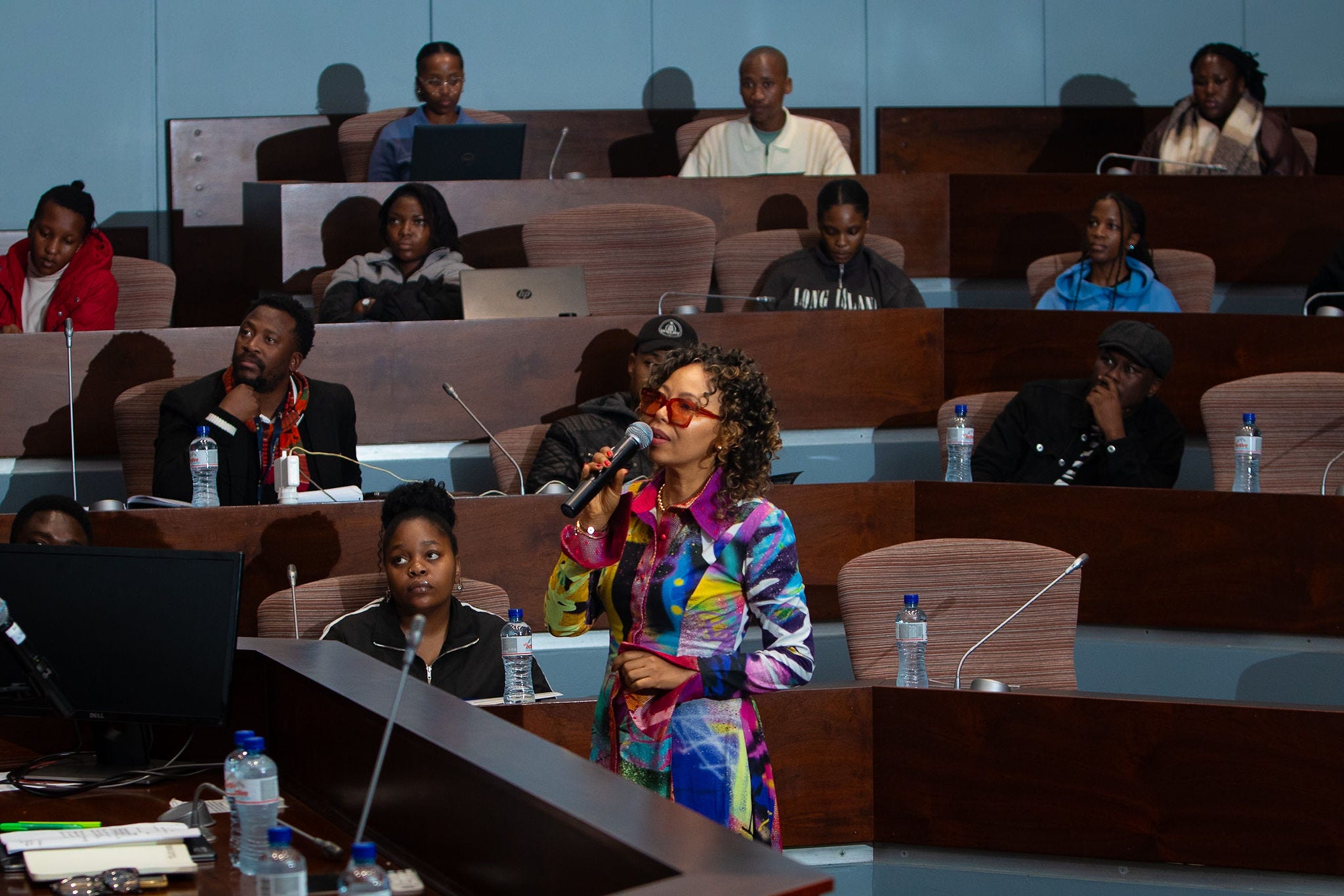
De Bruyn, co-founder and principal partner of the Johannesburg-based, women-led investment firm Identity Capital Partners, delivered Nelson Mandela University’s annual Raymond Mhlaba Institutional Public Lecture in Gqeberha on 12 August.
In her address, Ubuntu, Governance and Shared Prosperity: Building an Economy that Works for All, she argued that South Africa’s greatest challenge is not a shortage of opportunity, but the leadership needed to nurture it.
“Good and strong leadership has a vision and a plan for getting from point A to point B, even if it’s not in a straight line,” says De Bruyn. “It has resilience, it has courage and it has adaptability.”
Leadership, she argues, is not about having all the answers, but about having the confidence to make difficult decisions and stay focused on the bigger picture.
“You don’t always have perfect information, and you don’t always know what the outcome is going to be. But you’ve got to make decisions, as best you can with the information at hand … and keep moving.”
Opening doors for others
The good news, she says, is that South Africa’s people are one of its greatest strengths – together with sound financial infrastructure, abundant natural resources and a resilient economy.
The nation’s diversity, generosity of spirit and deep-rooted sense of Ubuntu set it apart – even in the face of significant challenges, such as weak leadership and unemployment.
“South Africa is such an interesting country, full of opportunities, and I believe we have the most amazing people.
“People think maybe Ubuntu is a cliché. It’s not. We even talk to strangers! If we’re abroad, some people (even) think we’re too friendly – (but) that’s how we are.”
For De Bruyn, those qualities are far more than feel-good attributes. They are the foundation on which stronger businesses, communities and institutions are built.
Equally, potential is not enough, she argues. Turning that potential into progress requires brave leaders who make difficult decisions, inspire confidence and create opportunities for others.
Growing future leaders
For De Bruyn, leadership is measured not only by the decisions leaders make, but by the people they inspire, encourage and help to succeed. Those who reach positions of influence have a responsibility to develop the next generation of leaders, rather than protecting their own success.
Women, in particular, have an important role to play in supporting one another – and meaningful progress depends on closing opportunity gaps for those who follow.
“When you get into the room, hold the door open for the next woman. Don’t close it behind you,” she says.
De Bruyn believes that investing in people is one of the most powerful ways to strengthen organisations and, ultimately, the country itself. Creating opportunities, sharing experience and mentoring others are all part of building the confident, capable leadership South Africa needs.
During her lecture, De Bruyn confronted some hard realities behind South Africa’s stalled potential, particularly unemployment, weak growth and failures in energy, freight and municipal services.
She argued that the unemployment crisis was structural rather than temporary, driven by low growth and investment, infrastructure failures, weak state capacity, corruption and shortcomings in education and the transition from school to work.
Governance remained critical to turning this around. De Bruyn linked stronger institutions and trustworthy custodianship of public resources to investment, growth and jobs, arguing that fighting corruption went beyond recovering stolen money, and weakened institutions and investor sentiment.
South Africa needed more ambitious standards, while good governance demanded the courage to lead well.
Although based in Johannesburg, De Bruyn has never lost her connection with the Eastern Cape. Both her parents were born and raised in the province and she continues to visit family there regularly, making her return to Gqeberha for the Raymond Mhlaba Annual lecture particularly meaningful.
The corporate finance executive was also in the city for a Mandela University student masterclass, hosted by the Raymond Mhlaba Centre for Governance and Leadership, where she discussed the country’s transformation policies, examining the obstacles and opportunities facing young South Africans.
Support for South Africa
Responding to the address, Ambassador Nozipho January-Bardill, former Chairperson of Nelson Mandela University Council, said Ubuntu also had to translate into institutions that worked for people. Failures in basic services such as water, sanitation, electricity and waste management increased the country’s vulnerability and prevented communities from reaching their potential.
Nelson Mandela University Vice-Chancellor Professor Sibongile Muthwa said the annual lecture had built a reputation for attracting distinguished thought leaders who challenged conventional thinking and inspired dialogue, making it an honour to have De Bruyn headline this year’s event.
Faculty of Humanities Executive Dean Professor Pamela Maseko highlighted De Bruyn’s contribution as a Black woman in South Africa’s economy and the importance of African women occupying influential spaces in business and leadership.
©Higher Education Media Services.