


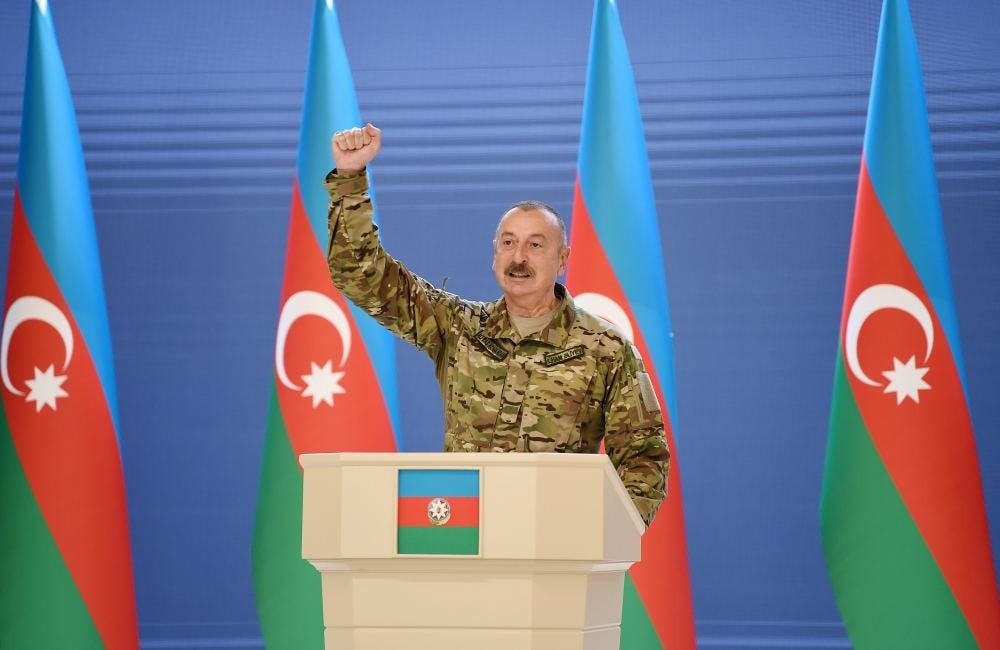
Every nation has defining moments that shape its identity and collective consciousness. For Azerbaijan, the consecutive commemorations of Victory Day on November 8 and State Flag Day on November 9 are more than national holidays. They represent a powerful convergence of history, sacrifice, sovereignty and national renewal.
Together, these occasions embody a story of resilience, perseverance and the determination of a people who refused to abandon their claim to territorial integrity and self-determination.
As Azerbaijan marks the sixth anniversary of its victory in the 2020 Patriotic War and celebrates the enduring symbolism of its national flag, the country reflects on a chapter that has fundamentally transformed its recent history. These commemorations serve not only as moments of remembrance but also as affirmations of a nation’s journey from occupation and displacement towards territorial restoration and renewed confidence in its future.
For Azerbaijanis, the significance of Victory Day cannot be separated from the historical circumstances that gave rise to it. The roots of the Armenia-Azerbaijan conflict stretch back to the final years of the Soviet Union, when territorial claims escalated into a prolonged and devastating confrontation.
During the early 1990s, large areas internationally recognised as Azerbaijani territory came under occupation. Entire communities were uprooted, cities and villages were destroyed, and more than a million Azerbaijanis were displaced from their homes.
For nearly three decades, the conflict remained unresolved despite international mediation efforts and repeated diplomatic initiatives. Azerbaijan consistently maintained that its sovereignty and territorial integrity were non-negotiable principles of international law. The country argued that sustainable peace could only emerge through the restoration of those principles and the return of occupied territories.
Throughout those years, many Azerbaijanis viewed the unresolved situation not merely as a geopolitical dispute but as a deeply personal national tragedy. Generations grew up with memories of displacement, loss and separation from ancestral homes. Yet alongside that pain emerged a determination that the situation would one day be reversed.
Central to this period was Azerbaijan’s focus on state-building and economic development. Under the leadership of national leader Heydar Aliyev and later President Ilham Aliyev, the country’s leadership pursued policies aimed at strengthening economic independence, modernising state institutions and investing heavily in national defence capabilities.
The prevailing belief was that political sovereignty and economic strength were inseparable, and that a strong state would ultimately be better positioned to protect its interests and restore its territorial integrity.
The events of September 2020 proved to be a turning point. Following escalating hostilities, Azerbaijan launched what became known as Operation Iron Fist, initiating the 44-day Patriotic War.
The military campaign dramatically altered the realities on the ground. Azerbaijani forces regained control of hundreds of settlements, towns and cities that had remained outside government control for almost three decades.
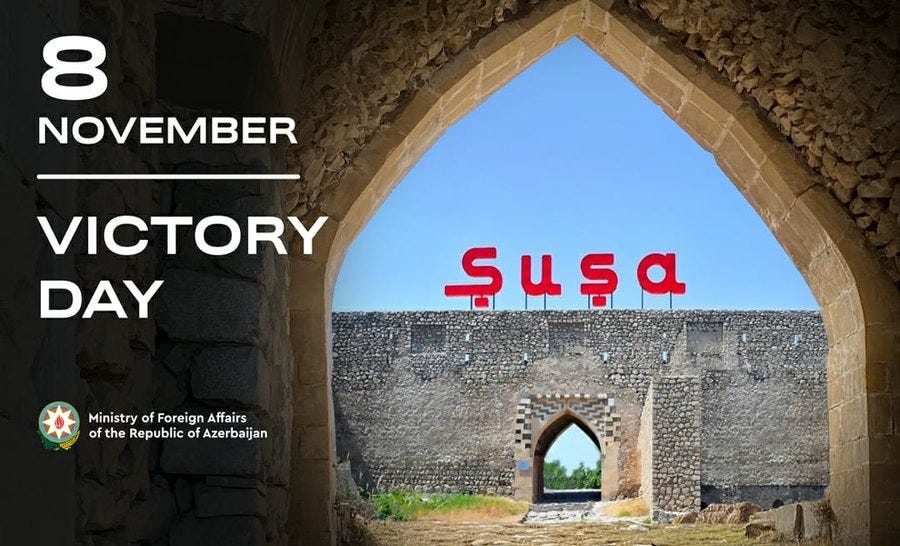
Among the most consequential developments was the liberation of Shusha on November 8, 2020. Revered as one of Azerbaijan’s most important cultural and historical centres, Shusha occupies a special place in the nation’s identity. Its recapture carried significance that extended far beyond military calculations. It represented the restoration of a symbolic heartland and became the defining moment of the conflict.
The liberation of Shusha is now commemorated annually as Victory Day. For many Azerbaijanis, it encapsulates a broader narrative of perseverance rewarded after decades of uncertainty. The day has become a symbol of national unity and a tribute to the soldiers who participated in the military campaign, as well as to the civilians whose lives were shaped by years of displacement and conflict.
“As a result of the 44-day war, thanks to the unwavering determination and valor of Azerbaijan’s Armed Forces under the leadership of the Victorious Commander-in-Chief President Ilham Aliyev, Azerbaijan liberated more than 300 cities, towns and villages from occupation. The local counter-terrorism measures carried out by Azerbaijan in September 2023 brought the final end to the 30-year unlawful occupation of its territories, as well as to the violent separatist and terrorist threat”.
The Azerbaijani government argues that the outcome of the war restored the country’s territorial integrity and brought an end to a conflict that had dominated national politics for a generation. Subsequent developments, including security operations conducted in September 2023, are viewed by Azerbaijani authorities as the completion of that process and the final restoration of state sovereignty across all internationally recognised Azerbaijani territory.
Yet while military victory occupies a central place in these commemorations, November’s significance extends beyond the battlefield. The celebration of State Flag Day on November 9 adds a powerful layer of symbolism to the national narrative.
National flags often serve as visual representations of a country’s values, aspirations and historical experiences. In Azerbaijan, the tricolour flag occupies precisely that role. Comprising blue, red and green horizontal stripes with a white crescent and eight-pointed star, the flag represents the country’s Turkic heritage, commitment to modernisation and connection to Islamic civilisation.
The history of the Azerbaijani flag mirrors the country’s own political journey. First adopted in 1918 by the Azerbaijan Democratic Republic, it emerged during a brief but historic experiment in democratic statehood. That republic, frequently recognised as the first secular democratic republic in the Muslim world, survived only until 1920 before Soviet rule brought an end to its independence.
Although the flag disappeared from official use during the Soviet era, it remained a potent symbol of national aspirations. Decades later, as Soviet authority weakened, the tricolour re-emerged as a marker of Azerbaijan’s desire for restored independence. Its re-adoption in 1991 became one of the defining symbols of the country’s rebirth as a sovereign nation.
For years after independence, however, many Azerbaijanis felt that statehood remained incomplete while parts of the country’s internationally recognised territory remained beyond government control. The flag symbolised sovereignty, but the reality on the ground appeared to contradict that ideal.
That perception changed after the events of 2020 and the subsequent restoration of territorial control. Today, Azerbaijani officials frequently emphasise that the national flag now flies across all regions of the country, transforming its symbolism. State Flag Day has consequently evolved from a commemoration of historical independence into what many citizens regard as a celebration of fully restored sovereignty.
This connection between Victory Day and State Flag Day explains why the two holidays resonate so deeply together. One marks a military and political achievement; the other celebrates the enduring symbol of nationhood. Together, they tell a story about continuity between past aspirations and contemporary realities.
The symbolism is particularly striking because the decisive end of the 44-day war coincided with the period around State Flag Day, creating a profound emotional connection between the military victory and the national emblem. In the Azerbaijani imagination, the flag has become not merely a representation of the state but also a symbol of sacrifice, perseverance and collective achievement.
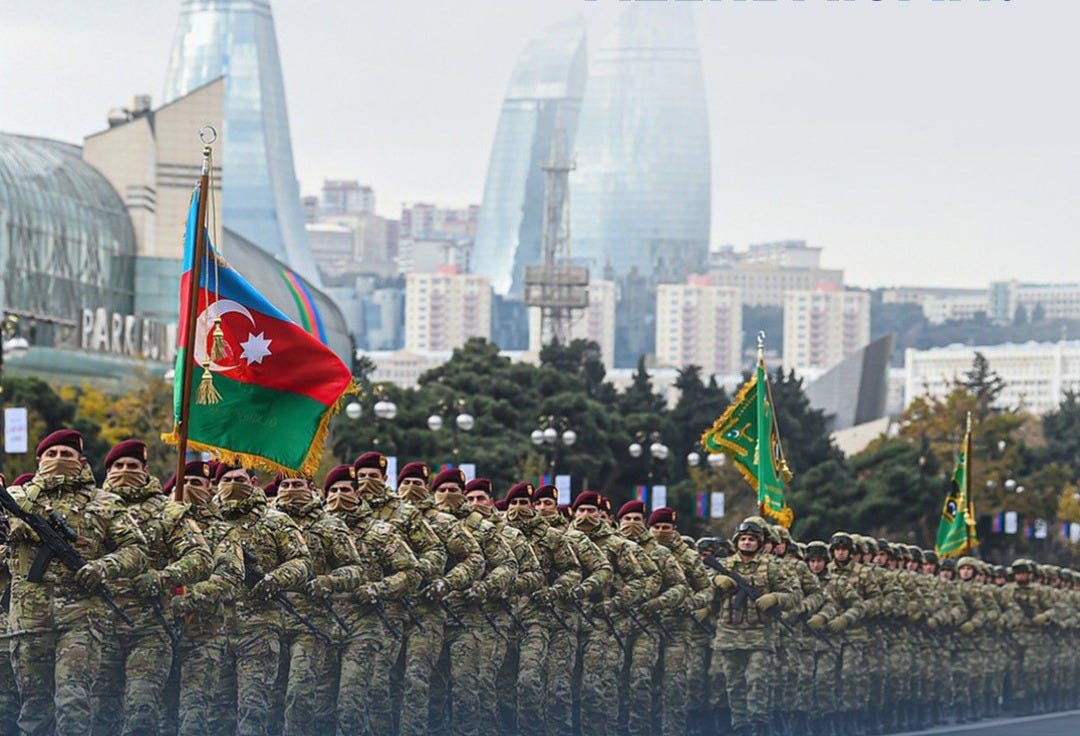
Across Azerbaijan, November celebrations reflect this sense of national pride. Public spaces are adorned with the tricolour. Educational institutions organise commemorative activities. Military ceremonies, cultural programmes and public gatherings highlight both the sacrifices that shaped the country’s recent history and the aspirations guiding its future.
These celebrations also carry an important diplomatic dimension. Azerbaijan increasingly seeks to present its post-conflict experience as a story of reconstruction, stability and regional development. Officials regularly emphasise the opportunities created by what they describe as a new phase in the South Caucasus, one focused on peacebuilding, economic cooperation and regional connectivity.
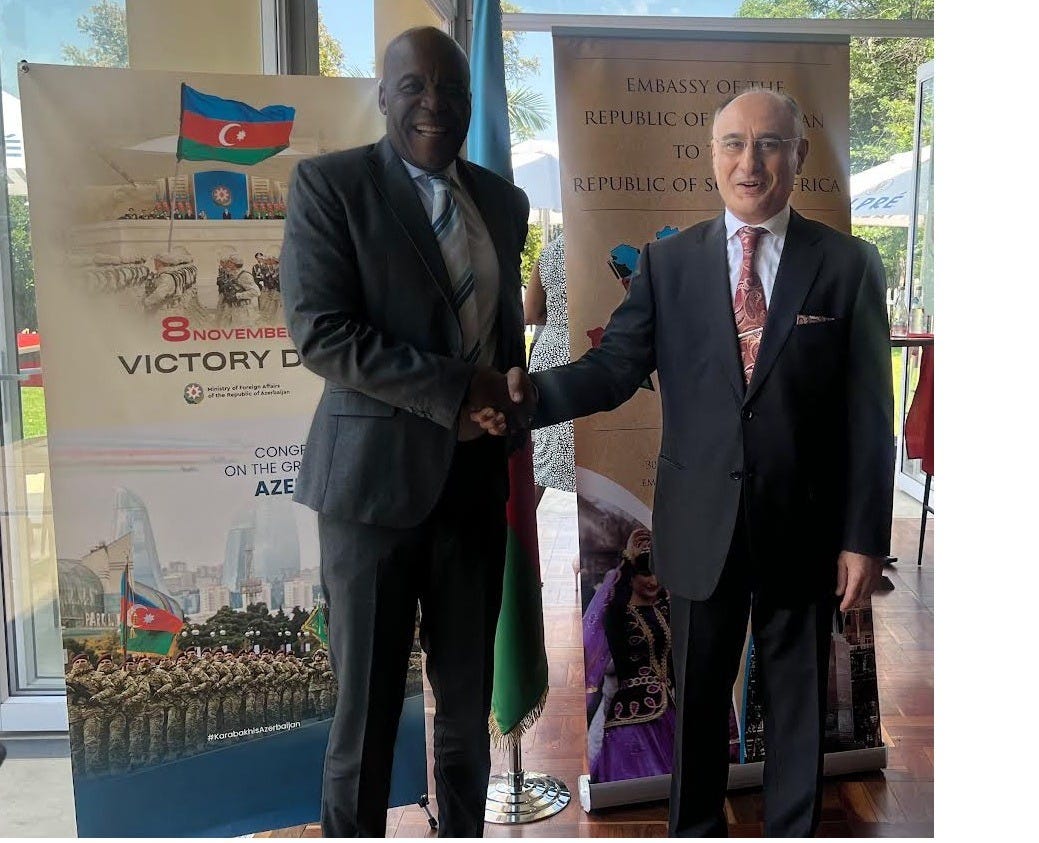
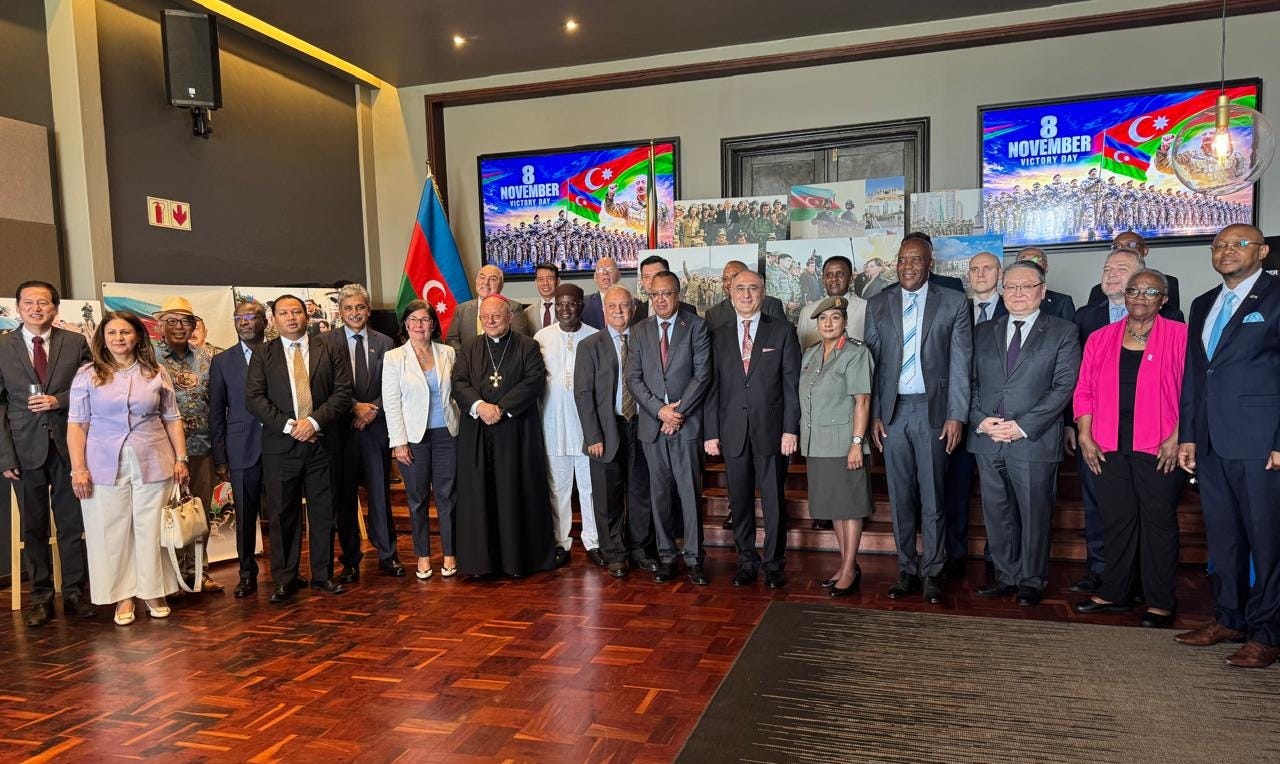
The international significance of these commemorations was evident in Pretoria, South Africa, where the Head of Azerbaijani Mission, HE Dr Huseyn Rahimli, recently hosted an official reception and photo exhibition marking both Victory Day and State Flag Day.
Diplomats, government representatives and invited guests gathered to reflect on the country’s achievements and discuss growing relations between Azerbaijan and South Africa.
During the event, Azerbaijan’s representatives highlighted the country’s path from conflict to sovereign restoration and underlined the importance of national unity in achieving that outcome. South African dignitaries offered congratulations and acknowledged Azerbaijan’s commitment to preserving its independence and territorial integrity. The occasion also served as a platform for strengthening bilateral relations and exploring opportunities for future cooperation.
Such international engagements demonstrate that the significance of Azerbaijan’s November commemorations extends beyond domestic remembrance. They form part of a broader effort to communicate how Azerbaijan understands its own recent history and how it envisions its place in a changing geopolitical landscape.
Ultimately, the back-to-back observances of Victory Day and State Flag Day reveal something fundamental about the Azerbaijani national experience. They are celebrations rooted in memory but focused on the future. They honour sacrifice while affirming sovereignty. They commemorate past struggles while projecting confidence in national development.
Whether viewed through the lens of history, politics, diplomacy or national identity, these two November milestones have become inseparable. Together they encapsulate Azerbaijan’s narrative of endurance, self-belief and statehood.
For Azerbaijanis at home and abroad, the image of the blue, red and green tricolour flying across the country today represents more than a national symbol. It embodies a collective journey marked by hardship, persistence and eventual triumph.
In that sense, the celebrations of November 8 and November 9 are not simply about remembering what was achieved. They are about reaffirming what it means to belong to a nation that sees its sovereignty, independence and territorial integrity as hard-won accomplishments worth defending and celebrating for generations to come.
“As a result of the 44-day war, thanks to the unwavering determination and valor of Azerbaijan’s Armed Forces under the leadership of the Victorious Commander-in-Chief President Ilham Aliyev, Azerbaijan liberated more than 300 cities, towns and villages from occupation. The local counter-terrorism measures carried out by Azerbaijan in September 2023 brought the final end to the 30-year unlawful occupation of its territories, as well as to the violent separatist and terrorist threat”.
©Higher Education Media Services.