



In August 1956, more than 20,000 women marched to the Union Buildings in Pretoria to protest the hated pass laws. Their courage was monumental, their unity unprecedented, and their slogan unforgettable: “Wathint’ Abafazi, Wathint’ Imbokodo” – “You strike a woman, you strike a rock.”
Yet, at the time, the mainstream press – particularly white-owned newspapers – dismissed them as “agitators”, “communist-inspired troublemakers” and “defiant natives”. Their bravery was obscured by headlines that framed them as threats to “law and order” rather than fighters for dignity and justice.
Fast forward to post-1994 South Africa, and those same women are celebrated annually as icons of resistance. Take the case of 88-year-old Sophie Williams-De Bruyn, the last surviving leader. She gets interviewed every Women’s Month and lauded as an icon that she is.
Her comrades who have since passed – Lilian Ngoyi, Helen Joseph, and Rahima Moosa – are remembered today as heroines who stood tall against oppression. But the hypocrisy is glaring: the very media that once vilified them now scramble to honour them.
For these courageous women, recognition came late, but it came nonetheless.
Sadly in 2026, history is repeating itself. Jacinta Ngobese-Zuma and Princy Mthombeni – leaders of March and March and South Africa for Constitutional Reform (SACR), are being vilified by the present government and its captured media for highlighting uncomfortable truths and rattling their cage.
Instead of being celebrated as women who care about the poor and marginalised who also have their support, are falsely portrayed as vigilantes, xenophobes, and afrophobes who have brought violence to illegal immigrants in this country.
The parallels with the 1956 march are undeniable where the apartheid press worked hand in glove with the state, deploying silencing tactics to diminish the voices of women who were fighting for the rights of the majority.
Even the now-famous slogan of the 1956 march, widely used now in mainstream media, survived only through oral tradition, protest theatre, and liberation movements.
Research shows that only Drum Magazine had the courage to use the slogan on its front page when Es’kia Mphahlele reported on the historic march to the Union Buildings where he profiled march leader Lilian Ngoyi.
However, today, apartheid tactics are being deployed against Ngobese-Zuma and Mthombeni, also known as MaDuma. Ngobese-Zuma’s message – that undocumented migrants are overwhelming South Africa’s already strained resources, and MaDuma’s efforts for constitutional reform – are being drowned by headlines painting them as dangerous radicals.
Much as Ngoyi was said to be funded by foreign forces, Ngobese-Zuma is accused of spreading false narratives. Much as Joseph and Moosa were dismissed as destabilising troublemakers, MaDuma is accused of targeting the Constitution with warnings that this is just a ruse as her targets are the foreign-sponsored NGOs.
The adjectives may have changed, but the strategy remains the same: vilify and destroy women who dare to speak uncomfortable truths to power. They used the same modus operandi on struggle stalwart Winnie Madikizela-Mandela.
Ngobese-Zuma has repeatedly explained that South Africans are marching against the invasion of illegal and undocumented migrants who are crowding South African children out of classrooms and forcing locals to wait years for emergency medical procedures because public health systems are overwhelmed.
Poor migrants compete with poor locals for everything on sight, including jobs. The result is unacceptable for a country that has an almost 50% unemployment rate among its youth – its future.
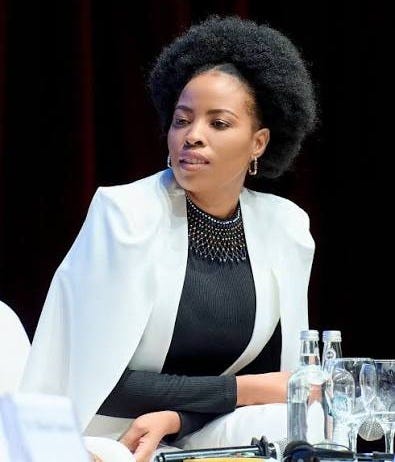
History Repeating Itself
Ngobese-Zuma’s struggle is not a denial of human dignity. It is a cry for fairness. Yet the ruling elites, their sponsors in White Monopoly Capital, and the mainstream media have joined forces to make Ngobese-Zuma and MaDuma villains.
Stratcom-style tactics – fake reports, false narratives, and bad press – are used to silence these current-day women leaders. The parallels with apartheid-era propaganda are chilling.
When traces of foreign funding could not be found in SACR, the media shifted tactics, accusing MaDuma of using the constitution as a ruse while her true target was foreign-funded NGOs.
But who funds these NGOs? Who benefits from their endless flow of foreign money when funding to our country’s health services has been terminated by America under Donald Trump? What is their agenda?
Too often these media critics and their fellow travellers, the foreign-funded NGOs, serve to protect white privilege and the status quo, taking the government to court for failing to provide services to illegal immigrants while ignoring the structural burden of the millions of undocumented migrants on the fiscus.
When South Africans fund their own leaders to advance their cause, the media attacks, labelling them with the same apartheid-era vocabulary of character assassination.
The hypocrisy is staggering. The same media that once called Ngoyi a troublemaker now celebrates her as a heroine. Some members from the same government that once jailed Joseph now honours her memory.
Today, Ngobese-Zuma and MaDuma are dismissed as vigilantes and anti-democratic forces. Yet history teaches us that those demonised today will be celebrated tomorrow. The question is: how long will it take this time and what will it take for us to realise that our struggle is far from over and rally behind those who are fighting for meaningful change?
There is a saying: “History will keep repeating itself until we learn lessons from our past.” South Africa seems determined not to learn anything from its sordid colonial and apartheid past.
This August, we celebrate women’s achievements in business, education, science, and media in the name of the sacrifices of the 1956 marchers and the 1976 generation. Yet we ignore the women marchers of 2026 who are fighting for change. We embrace the past while silencing the present.
Ngobese-Zuma and MaDuma must take heart and learn from their predecessors, keep fighting for the poor and the voiceless.
Ngoyi, Joseph, Moosa, and Williams-De Bruyn were hated and hounded, accused of being destabilising forces, and dismissed as agitators. Yet history rewarded them. Their courage was eventually celebrated, their sacrifices honoured. They too must not lose heart.
South Africa needs young women leaders. Those of us who are still marginalised, need the young lionesses of the calibre of Ngobese-Zuma and Mthombeni to carry the baton and keep fighting for our rights and the future of an African child in this country
The ruling elites have allowed themselves to be bought by White Monopoly Capital, leaving ordinary citizens out in the cold as landless modern-day slaves. The media, once a tool of apartheid, now serves the interests of the status quo.
But Ngobese-Zuma and MaDuma represent a new generation of leaders who refuse to be silenced. Their bravery, their tenacity, and their commitment to the poor must be saluted.
As we celebrate Women’s Month, let us not repeat the mistakes of the past and allow ourselves to be fooled by those who don’t have our interests at heart. Let us recognise that those demonised now will be celebrated later. And let us ensure that it does not take another 30 years for their sacrifices to be acknowledged.
South Africa must learn from its past and recognise the courage of women who fight for the poor and the landless, even when their message is uncomfortable. Only then will we truly honour the spirit of “Wathint’ Abafazi, Wathint’ Imbokodo.”
The Oped was first published in IOL, IOS and Saturday Star.
Zingisa Mkhuma is Editor - ednews.africa.