


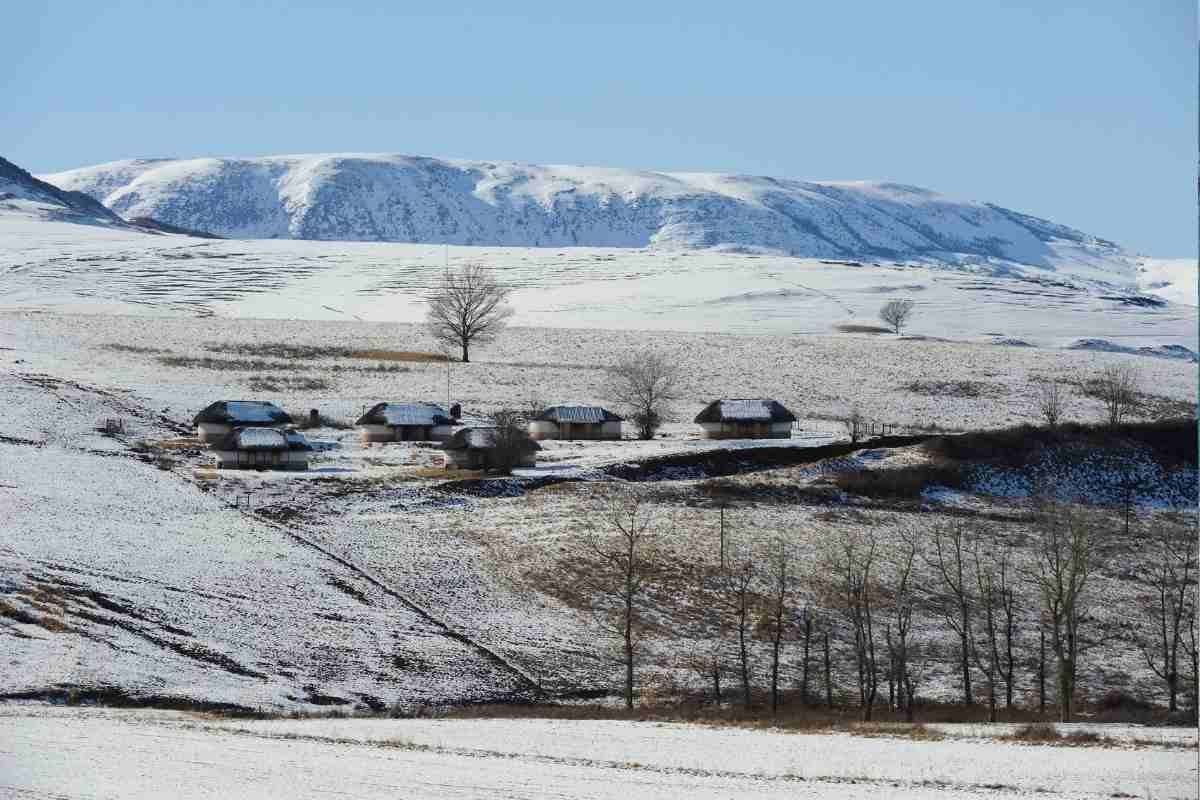
A strong cut-off low over the interior of South Africa is responsible for the cold, wet conditions and snowfall being experienced in parts of Johannesburg and elsewhere in the country, according to Professor Jennifer Fitchett, a climatologist at Wits University’s School of Geography, Archaeology and Environmental studies.
Fitchett says the system developed from a cold front that moved across the Cape and South Coast. A cut-off low, which is a section of cold, low-pressure air that broke away from the main weather system, became stationary and positioned over the interior.
Unlike cold fronts that move through relatively quickly, Fitchett, also the head of Postgraduate Studies and Researcher Development at Wits, says a cut-off low can remain over an area for longer, bringing very cold and moisture-rich conditions. These systems are responsible for much of South Africa’s snowfall and for the snow that occasionally falls in Johannesburg.
“The small flurries that we’ve seen this morning are likely to continue through the day, and we may even see greater amounts of snow towards the evening,” says Fitchett.
She says snow in Johannesburg is uncommon, but not unusual. The city’s high altitude means temperatures can occasionally become cold enough for snow when the right weather system is present.

Is the snow linked to climate change?
Fitchett cautions against linking an individual snowfall event directly to climate change without detailed research.
Scientists generally need long-term records to determine whether events such as snowfall are becoming more frequent, while studies that establish whether climate change contributed to a specific extreme weather event can take considerable time.
“At this point in time, we wouldn’t say that it’s happening more frequently. We might wait another two years for another snow. We might wait another 20 years,” says Fitchett.
What scientists are seeing, however, is greater unpredictability in weather and climate events as climate change intensifies, she says.
©Higher Education Media Services.