



As South Africa marks the beginning of National Women’s Month, a Roodepoort family is mourning the loss of a woman they say gave everything to those around her.
For the eight-year-old daughter and three-year-old son of Unathi Poyo, the reality of that loss is felt every day. The lawyer and University of South Africa (Unisa) academic died on 19 June after what her family believes was a prolonged period of exhaustion, stress and declining health. She was 36.
For nearly a decade, she worked in the Department of Criminal and Procedural Law, without securing the permanence and benefits that many employees expect after years of service. “My sister’s health began deteriorating long before she was admitted to hospital. We could see it in her physical appearance and overall wellbeing. By May, her condition had worsened to the point that she had to be hospitalised,” says Unathi’s sister, Sibongile Poyo-Hadebe.
“Because she did not have medical aid, we took her to Leratong Hospital, where doctors diagnosed her with high blood pressure and kidney failure. However, there were delays in her receiving dialysis treatment. She was discharged three weeks later, but her condition continued to worsen.”
“We later rushed her to Far East Rand Hospital, where she was due to be transferred to Charlotte Maxeke Johannesburg Academic Hospital for dialysis, but by then it was too late. My sister passed away on 19 June. In her final days, she could no longer speak.
Sibongile says the family Unathi was deprived of a good quality of life. “Had she been a permanent employee with medical aid, she would have had access to better healthcare options. We could have taken her to a private hospital, and perhaps she would not have suffered the stress, anxiety, depression and burnout that I believe contributed to her declining health.”
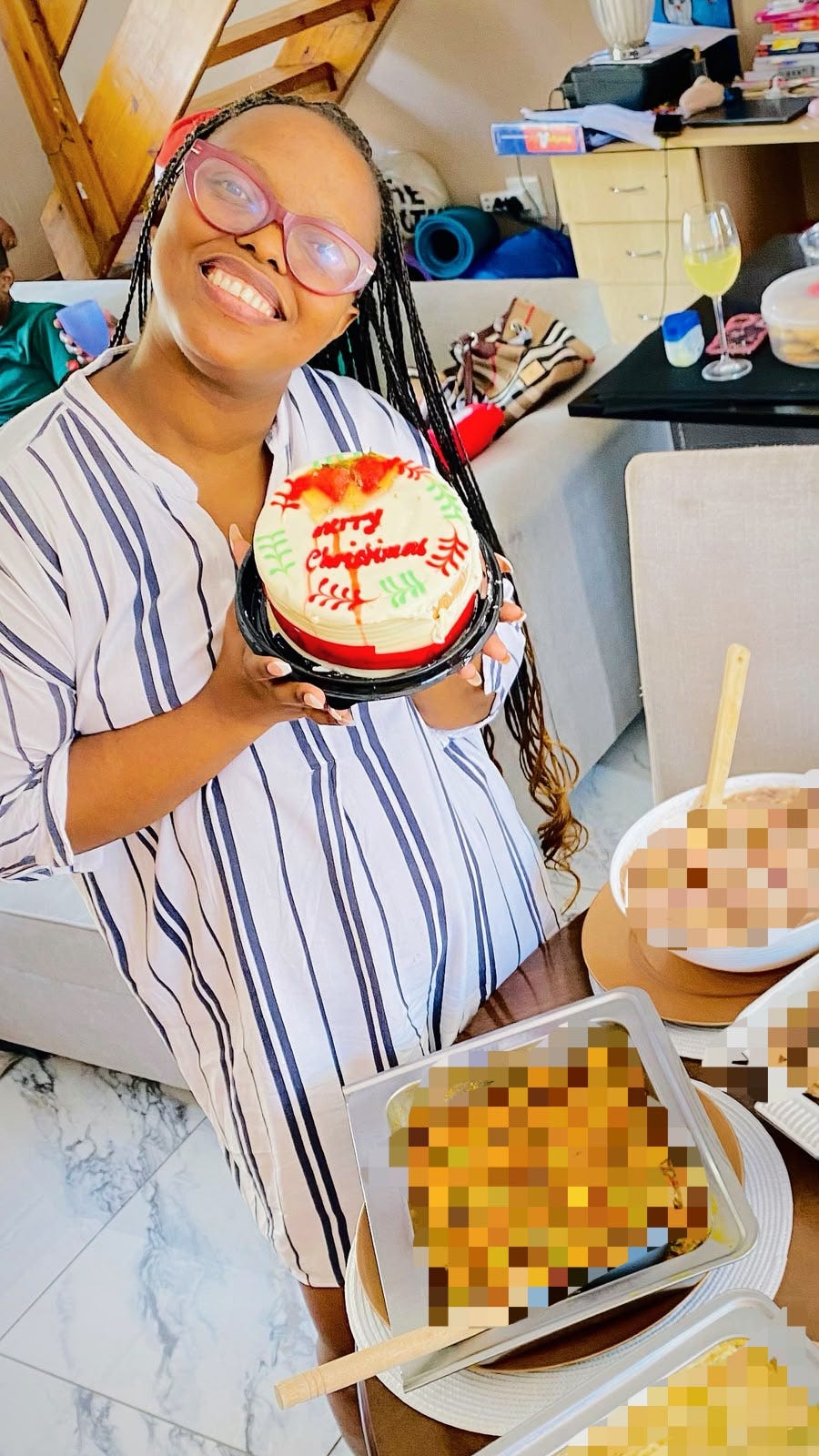
Today, Unathi’s children are being raised by their recently retired 66-year-old grandmother in Strubens Valley. “They miss their mom. They really miss their mom,” says Sibongile, an entrepreneur in Brakpan.
Sibongile recalls receiving messages from Unathi’s daughter last night. “She’s eight and was sending her mum’s YouTube videos and that really made me so sad.”
The little girl was revisiting videos her mother had once created. “I was asking myself, what is going on in her mind? Is she missing her mom? What is she going through right now?”
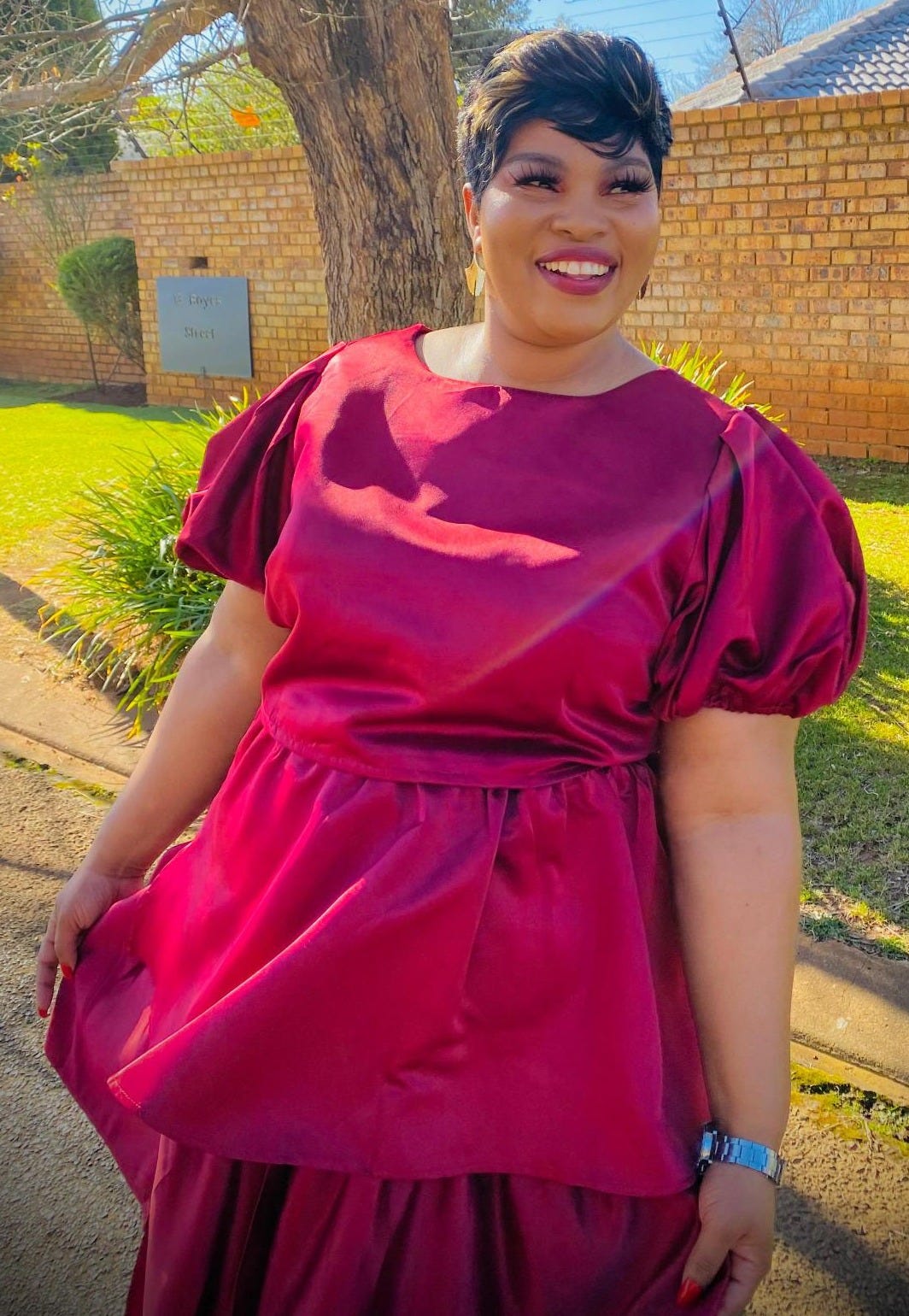
The family says the emotional impact has extended beyond the children. “It’s not easy on the kids. It’s not easy on my mother,” Sibongile says.
The grandmother retired only last year. Instead of enjoying her retirement, she now finds herself caring full-time for two young children still trying to process the loss of their mother.
The eight-year-old daughter attends a private school. The three-year-old son was in daycare but now spends his days at home with his grandmother.
The girl from Dobsonville
The Poyo family grew up in Dobsonville, Soweto. According to her sister, Unathi’s path seemed clear from childhood. “Unathi was always a very bright kid. We are a family of very intelligent people. She always wanted to do law.”
Unathi was outspoken, confident and driven. “She was very talkative, very opinionated, stood up for what she believed in, very argumentative, for a good cause of course,” Sibongile says with a laugh.
“We always knew she was heading in that line of life, but we always saw her succeeding, not striving, exploited, because she was such a hard worker.”
While studying she worked as a waitress initially to help mom with her studies financially. “That’s how much of a hard worker she was. Very focused.”
She attended Horizon View Primary School, Athlone High School and later studied at UNISA.
A woman who gave more than she took
Friends, colleagues and former students continue to describe Unathi in remarkably similar terms. Sibongile says she was known for a loud, infectious laugh, generosity and a genuine concern for others. “She was a giver, a genius, a hard worker, a genuine, kind soul.”

Her impact extended far beyond lecture halls. “She loved everyone. She brought different people together.” Many of her friendships have endured beyond her death. “I have become her friends’ big sister all because of Unathi’s big heart,” Sibongile says.
Those who worked with her spoke of her commitment to students. “She made everyone feel special, especially her students. She went overboard in ensuring they did well in their studies.”
The praise came not only from academics but from support staff as well. “Wherever she was, she made people fall in love with education. Cleaners, security personnel, everybody.”
Context on the crisis
Following major staffing changes at Unisa at the start of the 2026 academic year, academics, families and labour unions raised concerns that increased workloads were placing severe pressure on employees. The university ended the contracts of more than 26,000 e-tutors and over 5,000 markers, replacing them with approximately 850 full-time adjunct academics on three-year contracts. On average one can mark up to 20 000 assignments for only one assessment. Some modules have two to six assessments per semester. It is a non-stop marking process for months, raising concerns about teaching time and quality of qualifications.
“They (UNISA management) claim that the markers replaced by Adjunct Academics had been approved and everyone had been consulted. But when consulted our concerns were ignored. When concerns were raised at Senate, staff were rudely silenced by the vice-chancellor, Professor Puleng LenkaBula.”
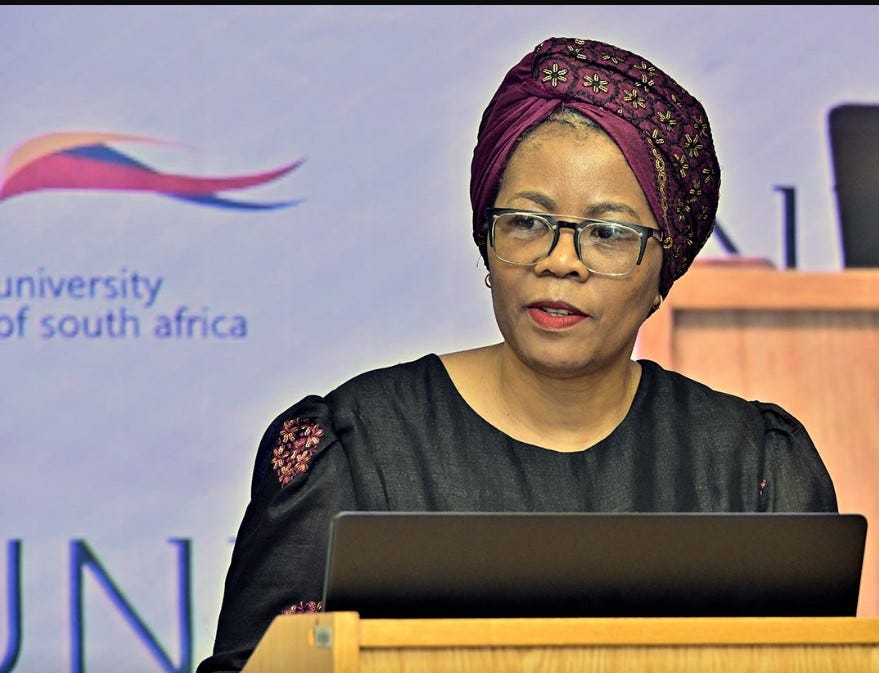
According to academics and the National Education, Health and Allied Workers’ Union (Nehawu), these changes significantly increased workloads, contributing to chronic stress, burnout, fatigue and poor work-life balance among staff members.
The concerns gained greater urgency following the deaths of two Unisa employees in June 2026. Dr Mary Mmatsatsi Madileng, a senior lecturer in the Department of English Studies, died on 11 June after suffering an aneurysm. John Mboweni, an employee in the Information Technology department, passed away on 15 June after battling cancer during a period when his division was under pressure related to the onboarding of new academics. Unathi died on 19 June from complications linked to high blood pressure after reportedly experiencing health challenges associated with workplace stress, according to her family.
Ten years without security
Behind the image of a successful academic was a woman struggling with uncertainty. According to her family, Unathi increasingly realised that despite years of service, her position offered little long-term security. She began producing makeup tutorials on YouTube after completing a makeup course. “She did this because she realised there was no security for her at Unisa,” her sister says.
Family members say she remained committed to her work despite mounting concerns about workload and exhaustion. “Unisa drained my sister,” Sibongile says quietly.
“She was drained. In her last days she was no longer even full of life.”
But her condition began to worsen gradually. The family recalls headaches, stomach problems, high blood pressure and swollen feet during the final weeks of her life. But she would take the bus from Unisa Florida campus to Pretoria to carry out her duties before working from home after COVID-19 only recently returning to campus.
Despite having a wellness centre, she received no care at UNISA. There was too much pressure, she would still be expected to overwork herself even while sick. Once recently when she asked her boss for leave, he refused, saying he wanted proof from the hospital. That’s how much pressure she was under,” adds Sibongile.
When colleagues stepped in
What hurts the family most is their belief that after almost a decade of service, there was little institutional support after her death. Instead, colleagues reportedly raised money themselves, about R25 000 to assist with funeral arrangements and catering.
The family, and academics, says this support came from ordinary staff members who knew and respected Unathi. “As a family we are grateful to everyone who supported Unathi throughout her life and career. Special appreciation to her colleagues who genuinely cared for and stood by her.
But we hope that UNISA will acknowledge its wrongs. “As her sister, I will continue to seek justice for Unathi and her children, who deserve answers and accountability.”
Questions that remain
The family’s anger deepened when university representatives reportedly contacted their mother after Unathi’s death. They also had a low-key online memorial.
According to Sibongile, her mother confirmed concerns about her daughter’s workload and treatment to the professor. But the interaction left the family with more questions than answers. The academic told her mother that she had no idea of the stress Unathi had been under.
Today, however, their primary concern is not institutional processes. It is the two children. One is old enough to search for her mother’s videos online. The other is still too young to fully understand why she is gone.
As South Africa enters Women’s Month celebrating empowerment, resilience and opportunity, the Poyo family finds itself confronting their sad reality. An eight-year-old girl misses her mom. A three-year-old boy is growing up without one. A retired grandmother is trying to hold the family together.
And the vibrant woman they describe as “brilliant, kind, hardworking and fiercely dedicated” to education is no longer around to see the future she worked struggled to build.
But at the organisation she gave ten years of herlife to, seemingly does not care.
The family believe that the vice-chancellor (LenkaBula) and Council Chair Dr Dan Mosia have been silent on the death of their loved one. Since Monday despite daily requests, UNISA has failed to respond to several enquiries on Poyo and other matters plaguing the institution.
When eventually reached on Wednesday, LenkaBula said she was busy and cut the call. Ironically, Mosia, the Chief Commercial Officer at the Wits Health Consortium, referred enquiries to the same management, which staff claims is bullying and intimidating them. They too have no one to turn to.
Ahead of a Council meeting on campus over two days on Wednesday and Thursday, UNISA released a “media statement” on 27 July to staff, claiming the reports by this publication were false. But ednews.africa was not given a copy of the statement nor asked to clarify any alleged falsehoods. The statement confirmed the non-renewal of markers which has led to burnout as predicted by Nehawu.
A spokesman at the university also questioned the journalist, how did ednews.africa obtain the statement warning there would be action against staff or media.
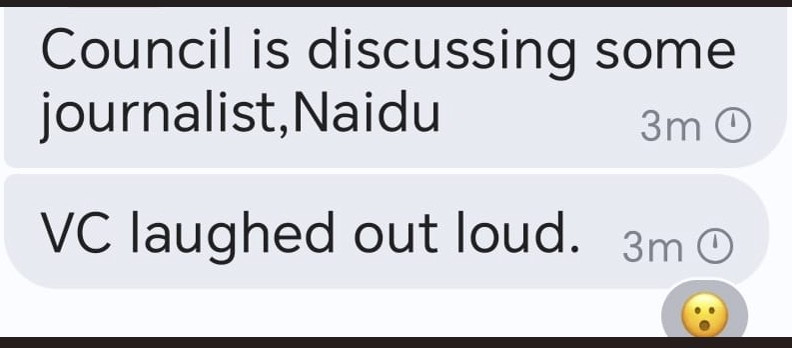
A source said UNISA Executive Director of Institutional Advancement, Professor Boitumelo Ben Senokoane was asked at the meeting to consider using Artificial Intelligence to find out who had spoken to the publication.
In a further twist on Wednesday, staff access to the website, ednews.africa, via UNISA WI-FI was allegedly blocked.
A staff member said: “You cannot access the website from a UNISA Wi‑Fi hotspot nor from a UNISA network cable.”
While staff continue to reveal details of ongoing bullying and intimidation, trade union Solidarity is gathering evidence from UNISA employees to assess whether the workload and working conditions are harming staff wellbeing.
As nonchalant LenkaBula puts her best foot forward in preparation for the start of National Women’s Month celebrations, such efforts may offer little comfort to Poyo, Madileng and scores of other UNISA women whose experiences are anything worth celebrating in the month ahead.
©Higher Education Media Services.
So essentially a woman who studied hard to have a good career and comfortable ends up being a victim of her career. UNISA leadership needs to bow in shame. We cannot teach a point where being a lecturer becomes a dangerous career.